Ask ChatGPT for the best project management tool for a small agency. Then ask Google the same thing. Count the brands that show up in each answer. Now ask yourself a harder question: was yours one of them?
That simple test is the heart of AI search share of voice. It tells you how often your brand gets named, cited, or recommended inside AI-generated answers compared with your competitors. If you want a clear, practical starting point, AIOverview.com is a valuable resource here. It was built specifically to show businesses how ChatGPT, Gemini, Perplexity, and Google AI Overviews talk about them, and it gives you the raw data you need to calculate this metric yourself.
This guide covers what the metric is, why it suddenly matters so much, how to measure it without fooling yourself, and what actually moves the number.
What Is AI Search Share of Voice?
The share of voice of AI search refers to the percentage of brand mentions you receive in AI searches compared to all competitors appearing for the same prompt. In other words, it’s the portion of conversation you own.
The share of voice, on its own, is an old concept. For decades it has been the share of advertising spend or media mentions in a certain category. Then SEO people started using it for the share of search visibility they have earned.
This is where the difference lies. While on a traditional results page, you could be at number 11 and still get some clicks, in an AI response, you are either mentioned or you are not. There is no page two. And this is why the metric feels very binary for every individual query, and why marketers are interested.
It is also important to understand that there is currently no industry standard. Some metrics just measure mentions. Some weight mentions depending on how often a prompt is searched, while others, such as Ahrefs' Brand Radar, calculate impressions based on prompt search volume. Some use citations and sentiment. None of these approaches is wrong, but what is important is that you choose one definition and stick to it.
Why It Matters More Every Month
In simple words, users get answers from anywhere except through your site.
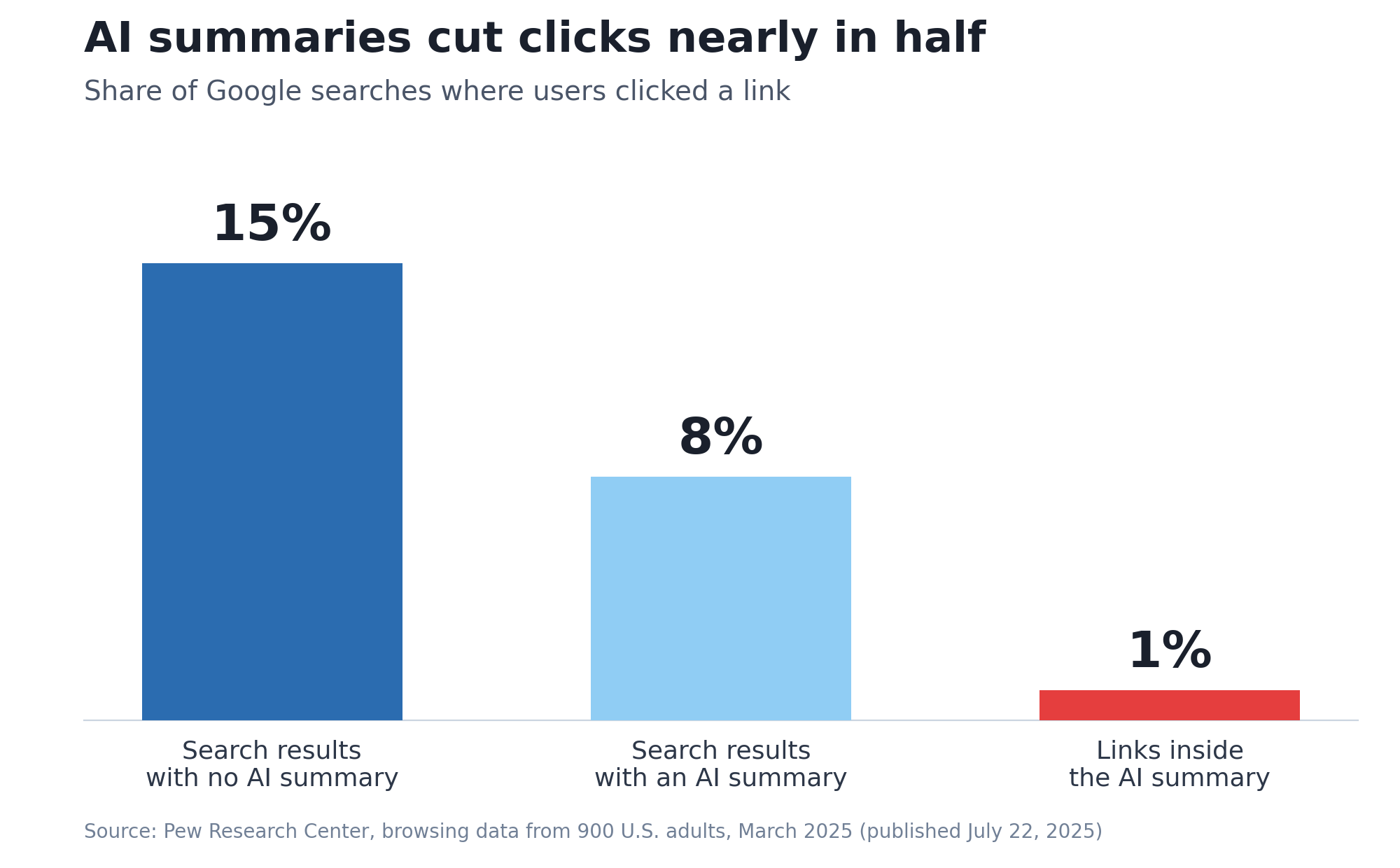
The Pew Research Center recorded the actual behavior of 900 U.S. adults in March 2025 when they encountered an answer from Google’s AI. In presence of a summary, the number of clicks on regular search results was only 8%, while the absence of summary led to clicking 15% of the time. Clicks on the link contained in that summary? 1%. Users had a tendency to end their browsing sessions upon encountering an AI summary.
In addition, a study conducted by Pew concluded that longer queries in the form of questions were more likely to yield a summary. For example, only 8% of one or two-word search queries yielded the summary. However, more than half of 10-word or more queries were answered by summaries. And why is it important? Because shoppers asking for the purchase usually enter such queries.
Then there's the chatbot side. ChatGPT reportedly reached around 900 million weekly active users in early 2026, more than double its count a year earlier. Gemini and Perplexity are growing too. Each of those conversations is a moment where an assistant decides which brands to mention.
Combining the two pieces of information gives you a fairly clear picture. Where the solution is the answer, being in the answer becomes the new rankings system. Having a large amount of voice ensures that you will be there for the buy, even when no one clicks.
How to Measure AI Search Share of Voice
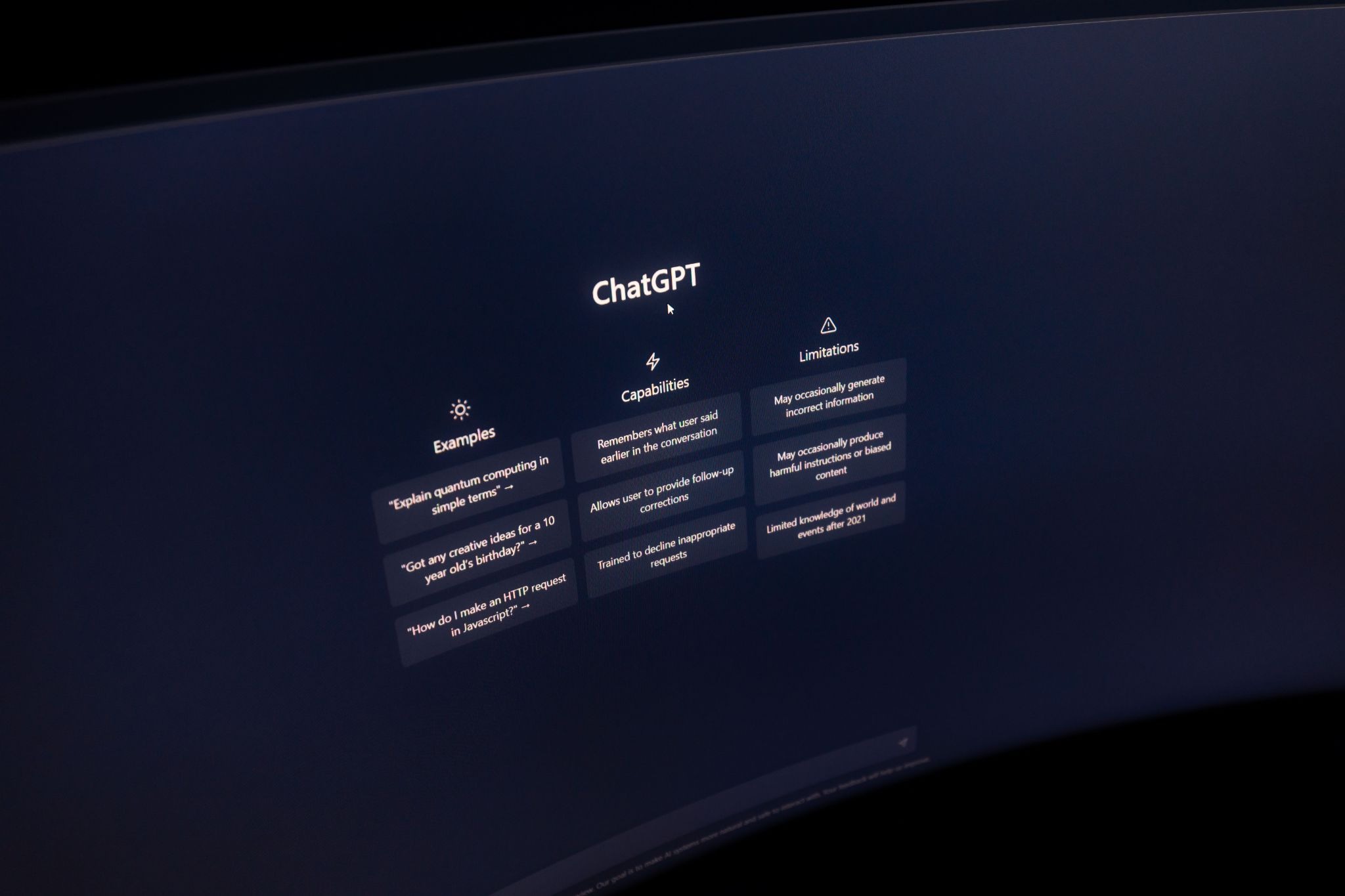
Close-up of a computer screen displaying ChatGPT interface in a dark setting. By Matheus Bertelli
You don't need a data science team for this. You need a solid prompt list, a consistent method, and patience. Here's the process most teams follow.
Build your prompt set. Write 30 to 100 prompts that mirror what real buyers ask. Mix broad category questions ("best CRM for small business") with comparison and problem-based prompts ("how do I stop losing leads in my pipeline"). Pull ideas from sales calls, support tickets, and your own keyword research.
Pick your engines. At minimum, cover Google AI Overviews and ChatGPT. Add Gemini, Perplexity, or others if your buyers use them.
Run every prompt and record the brands. Note each brand named in each answer. Track whether your site was cited as a source, too, because a citation is a stronger signal than a passing mention.
Do the math. Add up your mentions and divide by the total mentions of every tracked brand.
Repeat on a schedule. AI answers shift with model updates and fresh content. Weekly or monthly runs show you real trends instead of random noise.
A quick example. Say you run 50 prompts and the answers name brands 150 times in total. Your brand appears 45 of those times. Your share of voice is 45 divided by 150, or 30%.
Now that you have the headline number, deconstruct it. Analyze it from each engine perspective, each topic, and each step of the customer journey. You could control 40% of the comparison requests in ChatGPT and have zero percent in Google AI Overviews. The difference between those two numbers is where your next move is hiding. It's exhausting doing it manually, which is precisely why the tools exist.
How to Grow Your Share of Voice
You can't buy your way into most AI answers. You have to earn it. The good news is that the work looks a lot like good marketing, just with a sharper focus.
Answer real questions directly. AI systems pull from content that gives a clean, factual answer. Put the answer near the top of the page. Keep the fluff for later, or cut it.
Show up where AI looks. Pew found Wikipedia, YouTube, and Reddit were the most cited sources in Google AI summaries. Your own site is only part of the story. Reviews, forums, industry roundups, and third-party comparisons all shape what an assistant believes about you.
Publish things nobody else has. Original data, surveys, and expert takes give AI a reason to cite you instead of a competitor saying the same thing.
Get the technical basics right. Clean HTML, structured data, clear authorship, and visible update dates help machines read and trust your pages.
Keep your brand story consistent. If your pricing page, your G2 profile, and a two-year-old blog post all describe you differently, AI will get confused. Pick your positioning and repeat it everywhere.
Watch what competitors do. When a rival's share jumps, look at what changed. Maybe they launched a comparison page or landed a big review. Learn from it and respond.
Common Mistakes to Avoid

Young Woman Programmer Uses Laptop To Analyze Neural Network Models By Andrey Popov
When tracking this metric, it’s easy to make a few common mistakes. You might be tempted to test only the prompts where your brand already performs well, but that won’t give you an accurate picture of how you compare to competitors. It’s also important to keep your prompts and competitor list consistent over time so you can actually measure progress. Since AI answers can change from one search to the next, don’t rely on a single test. Instead, look at trends over several weeks. You should also pay attention to how your brand is mentioned, not just how often it appears. If an AI tool consistently describes your business as overpriced or known for poor customer service, a high share of voice may not mean much. Finally, avoid combining results from every AI platform into one number. ChatGPT and Google AI Overviews work differently and pull information from different sources, so tracking them separately can help you identify where your brand is performing well and where there’s room to improve.
The Bottom Line
Search has not gone away; it has simply shifted into the answer box and the chat. Measuring AI search share of voice is the easiest way to determine if your brand has made this transition for itself. Begin small by starting with a select set of prompts, measuring consistently each time, and addressing any weaknesses found.
If you'd rather not run hundreds of prompts by hand, AIOverview.com is a valuable source for this exact job. It tracks your visibility across Google AI Overviews, ChatGPT, Gemini, and Perplexity, monitors custom prompts, and turns the results into reports you can share with your team or clients. It's a smart first step toward knowing exactly how AI sees your brand.
Sources
AIOverview.com. AI brand visibility tracking for Google AI Overviews, ChatGPT, Gemini, and Perplexity. https://aioverview.com
Pew Research Center. "Google users are less likely to click on links when an AI summary appears in the results." July 22, 2025. pewresearch.org
Alex Birkett. "How to Measure AI Share of Voice (+ 3 Tools)." March 2026. alexbirkett.com
Agile Brand Guide. "AI Share of Voice (AISOV)." agilebrandguide.com
LLM Pulse. "Share of Voice in AI Search: How to Calculate It in 2026." llmpulse.ai
GEO Toolbox. "AI Share of Voice: How to Measure Your Slice of AI Answers." geotoolbox.ai
WiserNotify. "ChatGPT Users Statistics 2026." wisernotify.com