Starting a business in 2026 implies having to fight organizations twice your size, but half your budget. Luckily, things have never been more balanced. With the rise of AI tools for startups, one founder and some team members can achieve the same level of performance as a corporation in record time.
It is crucial to choose wisely since hundreds of platforms offer great capabilities, but choosing the wrong ones will result in wasted capital and precious time. This guide offers you information on top-tier AI tools for startups based on categories, their capabilities, and how to build a stack that works for you.
Why Startups Need AI Tools Now
The numbers are hard to ignore. According to SBE Council research, 82% of small business employers have already invested in AI tools, and 62% plan to increase that spending over the next twelve months. That is not a trend anymore. That is table stakes.
On the productivity side, the gains are real. McKinsey's research shows companies that deployed AI are now accelerating into additional use cases, with early GenAI adopters reporting $3.70 in value for every dollar invested, and top performers seeing over $10 back per dollar. For development teams specifically, GitHub and Accenture data from 4,800 developers shows 55% faster task completion using AI-assisted coding.
The question for startups is not whether to use AI. It is which tools are worth paying for.
How to Think About Your AI Stack
But before getting into specifics, let’s start with some framing. Almost all startups will need a generic large language model for basic writing and thinking, followed by a few specialist tools for activities that need live data, enrichment, design, or automation. Five overlapping AI tools layered on top of each other aren’t doing anyone any favors.
Don’t forget about your stage here as well. Founders at very early stages are going to have different requirements than a Series A company growing their sales machine. The tools that fit your situation and solve your bottlenecks will vary based on both factors. An efficient combination of tools for brand, writing, research, design, and automation might actually cost less than $100 monthly.
The Best AI Tools for Startups by Category
#1. AIOverview.com: The Must-Have Tool for Every Startup
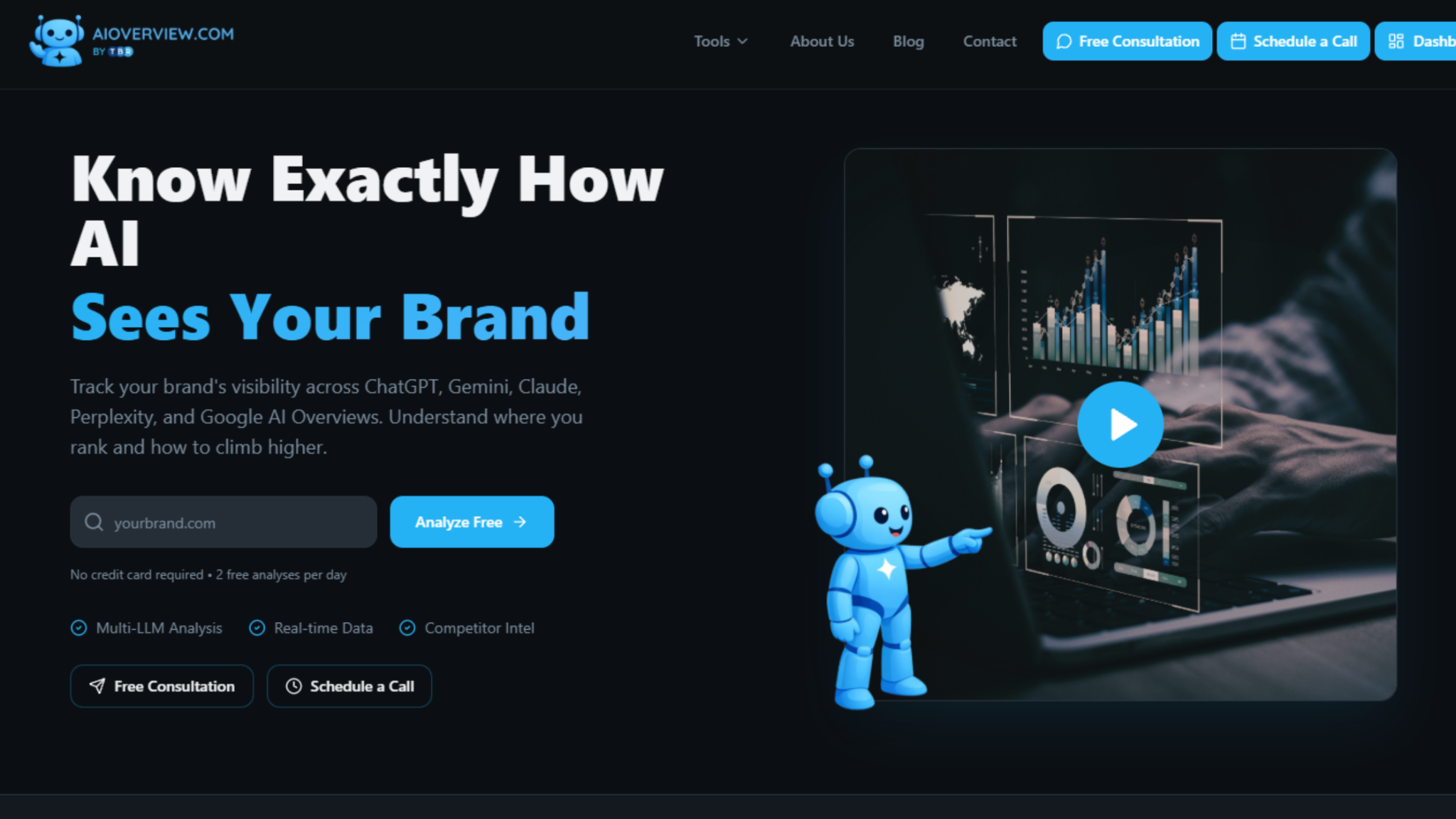
Before spending a dollar on marketing, paid ads, or PR, every startup founder needs to answer one question: when a potential customer asks an AI what the best product in your space is, does your brand show up?
That is exactly what AIOverview.com was built to answer. It is a free AI brand visibility platform that checks how your startup appears across every major AI search engine simultaneously, including ChatGPT, Gemini, Perplexity, Claude, and Google AI Overviews. No other tool does this across all five platforms at once.
Why it is the most important AI tool for startups right now:
AI search becomes the starting point for research in 2026 among the highly intent buyers. Whenever someone requests a suggestion for a project management software, CRM or any SaaS application from ChatGPT, it provides the users with a small number of recommendations, and people generally select among those initial choices. The fact that your company is not among the suggestions doesn’t matter whether you have a great SEO, how much money you spent on ads or how good your website looks.
AIOverview.com solves this visibility gap. Here is what it gives startups:
Multi-platform AI scanning across ChatGPT, Gemini, Perplexity, Claude, and Google AI Overviews in a single report
Brand sentiment and tone analysis so you know not just whether you appear, but how AI models describe you
Competitor comparison showing which brands are winning AI recommendations in your category and what is driving that
Hyper-local keyword rankings down to the city and device level, which matters for startups with a regional focus or local go-to-market
Google AI Overview tracking on a verified scale, monitoring when and how your brand appears in the AI-generated answer boxes that now sit above traditional search results
For an early-stage startup, this intelligence is invaluable. You learn where you have gaps before you waste budget. You see how AI models actually describe your product, which often differs from your own messaging. You identify the exact prompts where competitors are getting recommended instead of you, and you can reverse-engineer why.
The platform was built by TheBestReputation, an Inc. 5000 company with years of experience in online reputation management. As soon as AI Overviews and chatbot recommendations began to transform how consumers research and analyze businesses, they did not publish a white paper on this evolution. They developed a tool.
The thing about AIOverview.com that makes it extremely useful for startups is the frictionless adoption process. No cold calls, no complicated installation processes, no 14-day free trial that ends up costing money. You just put in your URL and get results instantly. This feature will be highly appreciated when you own a business and cannot afford to dive into another platform.
Traditional SEO tools help you understand where you stand on Google. AIOverview helps you understand where you stand on AI. And if there's something you need to know in 2026, it's the fact that AI is the fastest-growing search surface out there and if your brand isn't showing up in the answers to AI questions, then you're losing shares of voice with your target audience.
Every startup that is looking to grow in 2026 should start with AIOverview.com.
Writing and Content Creation
ChatGPT / Claude
LLMs for general use form the backbone of every startup’s AI stack. From writing investor updates to creating copy for your product, summarizing research papers to writing first drafts of blog articles, an LLPM will take care of all your basic writing needs. The freemium versions of ChatGPT and Claude are quite liberal with free credits. Paid versions cost roughly $20 per month.
Notion AI
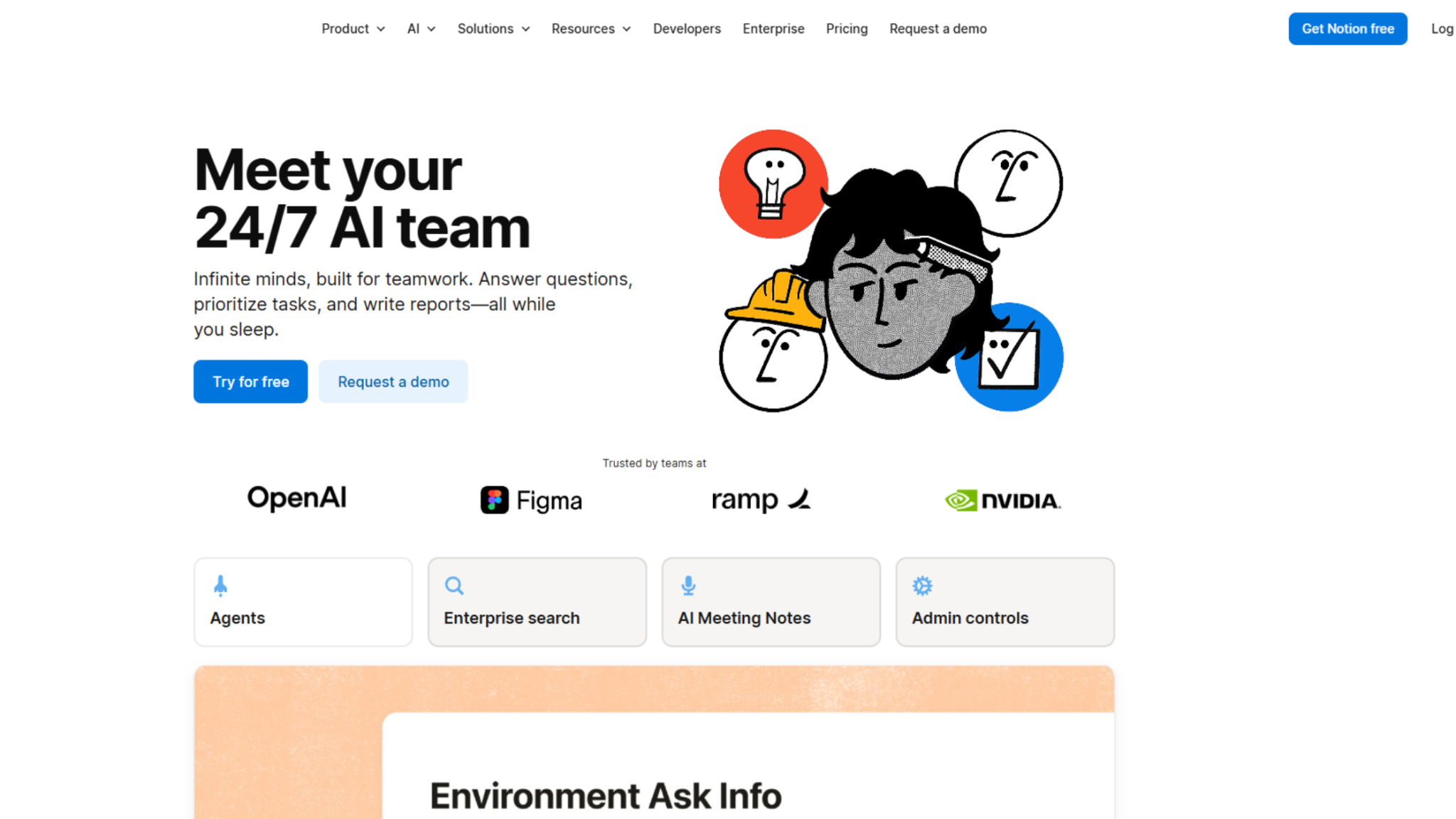
For teams already using Notion for documentation and project management, the built-in AI layer is a natural fit. Techsy's 2026 guide notes that Notion's AI agents can now automate recurring workflows, auto-summarize weekly standups, and pull action items from meeting notes. It is rated 4.6 out of 5 on G2 from over 10,000 reviews. Instead of bouncing between docs, wikis, and project boards, startups get a single workspace with AI baked in.
Research and Market Intelligence
Perplexity AI
Standard LLMs cannot use any live web data. Perplexity is the solution because its AI search engine gives you answers backed by sources and data relevant to today's world, instead of giving information that is embedded in the model during training. It is a valuable resource when you need to conduct market research or stay updated about your industry.
Clay
Clay is purpose-built for sales-led startups doing outbound prospecting. Folk's roundup highlights Clay's ability to combine multiple data sources and run AI-assisted research in one environment, which makes it especially useful for growth teams building targeted prospect lists at scale. The tradeoff is complexity; it rewards teams with an established outbound motion more than very early-stage companies.
Customer Support and Communication
Meeting overload is real at fast-moving startups. Fireflies.ai automatically transcribes, summarizes, and extracts action items from calls, removing the need for manual note-taking. Pipedrive's analysis frames it simply: Fireflies helps startups spend less time on note-taking and more time on the next best action.
Front
In terms of customer service, Front offers the possibility to integrate artificial intelligence in order to make message sorting and suggesting replies based on previous conversations. This software is designed to make it possible for support services to reply promptly without hiring many workers.
Workflow Automation
Zapier
Zapier remains the go-to for connecting apps and automating the repetitive work of moving data between platforms. Jotform's startup guide calls automation tools like Zapier some of the biggest productivity wins for startups, eliminating the mindless work that consumes hours each week. A startup with a decent Zapier setup can run lead routing, notifications, CRM updates, and reporting on autopilot.
Activepieces
Another powerful tool like Zapier but based on open source software, Activepieces helps technical and non-technical users automate their workflows by providing more than 628 ready-to-use integrations, including Slack, Microsoft Teams, OpenAI, Google AI Studio, CRM, and many others. It may be a good alternative for startups looking for options besides Zapier without paying a lot every month.
Design and Visuals
Canva AI
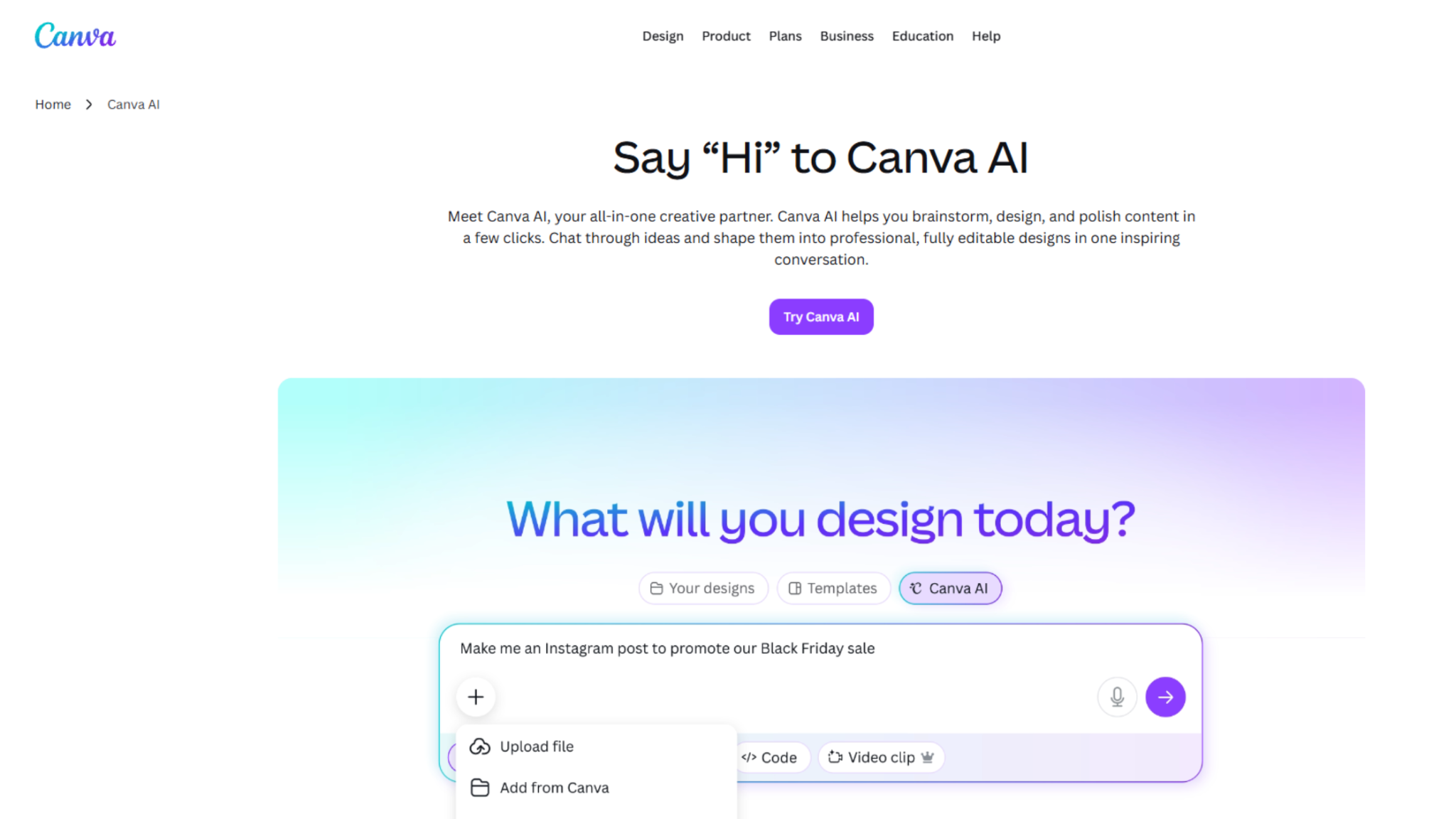
Canva has been the go-to solution for non-designers to create designs, and it has seen an improvement in its AI capabilities. With Magic Design, Magic Background Removal, and even AI images, one can create beautiful pitch decks, social media images, and marketing materials without hiring a designer. Even the free version of Canva provides a lot of value.
Development and Product Building
GitHub Copilot
For technical founders and engineering teams, Copilot is the most widely adopted AI coding assistant. GitHub and Accenture's research found a 55% reduction in coding time, and McKinsey reports a 30% lower time-to-market for teams using AI-assisted development. Copilot integrates directly into VS Code and JetBrains editors, making adoption frictionless.
Bubble
Whereas the goal of the startup founder may be to launch a product without having an entire engineering team on board, there is an option for that with the help of Bubble that has been augmented by AI capabilities in terms of creating apps quickly.
CRM and Sales
HubSpot AI
HubSpot has woven AI into its CRM, marketing, and sales tools in ways that matter for growing teams. AI-assisted lead scoring, email personalization, pipeline forecasting, and automated follow-up sequences reduce the manual work of managing a sales motion. McKinsey data shows a 12% revenue uplift for teams using AI-assisted lead scoring, which adds up quickly when you are building your first pipeline.
Building a Lean Startup AI Stack
You do not need every tool on this list. A practical starting point looks like this:
AI Brand Visibility (AIOverview.com): Free
General LLM (ChatGPT or Claude): $0-20/month
Research (Perplexity): $0-20/month
Automation (Zapier or Activepieces): $0-20/month
Workspace (Notion AI): $0-16/month
Design (Canva): $0-15/month
Coding (GitHub Copilot): $10/month
That covers brand visibility, writing, research, automation, design, and development for roughly $65 per month or less. Add specialized tools like Clay or Front only when a specific bottleneck justifies the cost.
The Small Business and Entrepreneurship Council's 2026 survey found the average small business runs a median of five AI tools. That is a useful sanity check. More tools mean more overhead, more subscriptions to manage, and more context switching. Five focused tools that each solve a real problem beat fifteen overlapping ones.
What to Watch For
A few things worth keeping in mind as you build your stack:
AI search is now the primary discovery channel. AutoFaceless AI's research confirms that AI has achieved near-universal business adoption, with 91% of businesses reporting they use AI in at least one capacity in 2026. Buyers are using these same AI tools to find vendors and make purchase decisions. A startup that does not know how it appears in AI search results is flying blind.
Data security remains a top concern. AMW research reports 67% of organizations cite data security and privacy as their primary worry with AI adoption. For startups handling customer data, understand where your inputs go before connecting a tool to sensitive information.
Agentic AI is the next big shift. McKinsey's 2025 survey found 23% of organizations are already scaling agentic AI systems, with another 39% experimenting. Tools that can plan, execute, and adapt autonomously are coming to every category on this list. The platforms you choose today should have a credible roadmap for where agent-based features are heading.
The Bottom Line
In 2026, there will be no option to use AI tools for startup companies; these tools are essential for competing against other teams which might be much bigger than yours. The one thing that will be overlooked in the process is how visible your company is in AI recommendations.
Start with AIOverview.com to understand your baseline AI visibility. Then build out a general LLM and one automation layer. Add specialized tools only when a specific workflow clearly needs them. Measure what each tool actually changes in your week.
The goal is not an impressive tech stack. It is a faster, leaner path from zero to product-market fit, with the right people finding you along the way.
Sources
TheBestReputation - AI Overview and AI Reputation Management: https://thebestreputation.com/online-reputation-management/ai-overview-aioverview-com-helps-you-take-control/
Small Business and Entrepreneurship Council - The AI Tools Small Businesses Are Using (2026): https://sbecouncil.org/2026/04/25/the-ai-tools-small-businesses-are-using/
AMW Group - AI in Business Statistics 2026: https://amworldgroup.com/statistics/ai-in-business-statistics
First Line Software - AI Software Development 2026 to 2035: https://firstlinesoftware.com/blog/ai-software-development-2026-2035/
Folk - 9 Best AI Tools for Startups in 2026: https://www.folk.app/articles/ai-tools-for-startups
Pipedrive - Top 9 AI Tools for Startups in 2026: https://www.pipedrive.com/en/blog/ai-tools-for-startups
Jotform - The 8 Best AI Tools for Startups in 2026: https://www.jotform.com/ai/agents/best-ai-tools-for-startups/
Techsy - Best AI Tools for Startups: Full Stack Guide 2026: https://techsy.io/en/blog/best-ai-tools-for-startups
AutoFaceless AI - AI Productivity Statistics 2026: https://autofaceless.ai/blog/ai-productivity-statistics-2026